



HKSAR’s Bold Move: Merging ASTRI and NAMI to Supercharge Hong Kong’s R&D Engine
By Dr. Daniel Chun, HKUST EMIA December 2, 2025
In a strategic pivot aimed at turbocharging Hong Kong’s innovation ambitions, the HKSAR Government has greenlit the merger of two powerhouse R&D centers: the Hong Kong Applied Science and Technology Research Institute (ASTRI) and the Nano and Advanced Materials Institute (NAMI). Announced in late 2024 (link here), this consolidation isn’t just administrative housekeeping—it’s a visionary step to streamline resources, amplify synergies, and position Hong Kong as a global leader in frontier tech.
As we edge into 2026, with transition groundwork underway, entrepreneurs and startups stand to gain immensely from this fused entity. But what’s driving the decision, and how will it ripple through the ecosystem? Let’s unpack the merger, its implications, and why it’s a win for Hong Kong’s entrepreneurial future.
The Backstory: Why Merge Now?
ASTRI, founded in 2000, has been Hong Kong’s go-to for applied R&D in information and communications technologies (ICT)—think AI, cybersecurity, and smart city solutions. It boasts over 1,600 tech transfers and nearly 1,200 patents, nurturing a talent pool of 400+ engineers (27% with PhDs). NAMI, established in 2006, complements this by spearheading nanotechnology and advanced materials research, fueling breakthroughs in sustainable manufacturing and biotech.
The Innovation and Technology Commission (ITC) proposed the merger in November 2024, citing overlapping strengths and the need to align with the Hong Kong Innovation & Technology Development Blueprint. As Prof. Sun Dong, Secretary for Innovation, Technology and Industry, noted, “This combination of two strong public R&D centres with complementary advantages and shared values will enhance our capability for high value-added applied R&D work.”
Key drivers include:
- Resource Optimization: Consolidating budgets and expertise to tackle mega-challenges like AI integration and microelectronics.
- Frontier Focus: Prioritizing national priorities such as life/health tech, robotics, and semiconductors—echoing the Blueprint’s call for “new quality productive forces.”
- Greater Bay Area Synergy: With ASTRI’s recent Shenzhen outpost in the Hetao Cooperation Zone, the merger bolsters cross-border R&D, accelerating tech transfer to industries.
An independent consultant is now crafting the transition roadmap, with implementation kicking off in 2025-26. Staff briefings have already occurred, emphasizing continuity and growth opportunities.
The Bigger Picture: Aligning with HK’s I&T Vision
This isn’t happening in isolation. The HKSAR is reshaping its R&D landscape holistically:
- Recent Moves: The Automotive Platforms and Application Systems R&D Centre folded into the Hong Kong Productivity Council (HKPC) earlier this year, while the Hong Kong Microelectronics R&D Institute launched in 2024 to champion third-gen semiconductors.
- Infrastructure Boost: The Lok Ma Chau Loop’s Hetao Park is fast-tracking construction, creating a Shenzhen-HK innovation nexus.
- Ecosystem Impact: Under the Blueprint, these shifts aim to diversify industries, from re-industrialization to digital health, injecting vitality into startups via contract research and licensing.
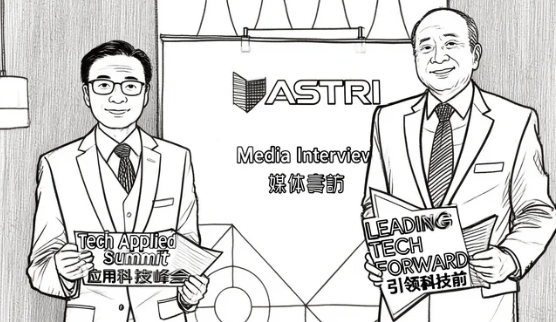
At events like ASTRI’s inaugural Tech Applied Summit in February 2025, leaders hailed the merger as a “key highlight” for fostering academia-industry ties. Partnerships with global players—like France’s Prophesee and Korea’s Smart City Association—underscore the merged institute’s potential for international draw.
Wins for Entrepreneurs and Startups
For Hong Kong’s vibrant startup community, this merger spells opportunity:
- Accelerated Tech Transfer: A unified powerhouse means faster commercialization—imagine seamless ICT-materials hybrids for your next-gen hardware.
- Talent Magnet: Combined brainpower (PhDs, patents, and networks) will spawn more spin-offs and collaborations, especially in AI and green tech.
- Funding Edge: Aligned with ITC grants, the new entity could unlock easier access to the Innovation and Technology Fund for prototypes and pilots.
- GBA Gateway: Entrepreneurs can leverage the Shenzhen presence for mainland scaling, tapping China’s vast market.
Challenges? Integration hiccups are possible, but the government’s emphasis on “synergistic collaborations” and staff buy-in suggests a smooth sail. As Ir Sunny Lee, ASTRI Board Chairman, put it, this builds on 25 years of positioning HK “on the global innovation map.”
Looking Ahead: A Merged Future for HK Innovation
By 2026, expect the new ASTRI-NAMI hybrid to debut as a streamlined R&D titan, driving Hong Kong’s leap from “shopper’s paradise” to “innovator’s haven.” For entrepreneurs, it’s a clarion call: Align your ventures with these priorities, and ride the wave of state-backed momentum.
The HKSAR’s bold stroke reaffirms its commitment to high-quality development. As we watch this unfold, one thing’s clear—Hong Kong’s entrepreneurs are at the helm of this transformation.
Follow Entrepreneurs.hk for deeper dives into HK’s I&T policies and startup spotlights.